Brittany and New Zealand share a common trait that maps don’t show: a deep attachment to the land, the sea and the stories that emerge from them. Comparing these two cultures means connecting two corners of the world where geography still shapes ways of life. This journey between Brittany and New Zealand reveals surprising echoes, as well as profound differences worth exploring.
Place names and living languages: when the landscape has a name
Have you ever noticed how Breton place names tell you about the terrain? Pen (headland), mor (sea), ker (village): each place name describes what people saw around them. New Zealand works on the same principle, but through te reo Māori.
The official register of New Zealand place names, managed by the New Zealand Geographic Board, lists thousands of Māori-language place names. Each Māori name encodes geographical or historical information. Aotearoa, the Māori name for the country, means “the land of the long white cloud”. Rotorua refers to the second lake. Whanganui describes a large harbour.
In Brittany, the Breton language plays a similar role. Bilingual signs remind us that a landscape can also be read through its names. Enthusiasts of Celtic and Oceanian heritage carefully document this linguistic kinship between two cultures separated by the entire planet. The website breizh-zelande.fr explores this cultural bridge between the two regions.
The difference lies in the status of the languages. Te reo Māori is an official language of New Zealand. Breton does not enjoy this recognition at the national level in France. This legal disparity affects transmission, signage and the language’s place in public life.
Māori and Breton cultures: two relationships with the land
Māori culture is rooted in the concept of whenua, which refers to both land and placenta. This dual meaning is no metaphor: it expresses a deep, physical bond between a people and their territory. Iwi (tribes) are connected to specific mountains, rivers and coastlines.
Brittany has a comparable relationship with its land, though it is less codified. Pardons, religious processions tied to a particular place, root communities in their territory. Fest-noz celebrate local identity through dance and music. In both cases, culture is rooted in a physical place, not an abstract idea.
Oral traditions and founding stories
Māori pass down their history through whakapapa (genealogy) and song. Each marae (meeting place) preserves its own stories. Brittany has a partial equivalent in the tradition of storytellers (kontadennou) and the Arthurian legends rooted in the forest of Brocéliande.
Both cultures faced intense linguistic pressure during the 20th century. Today, revitalisation efforts run through education: kōhanga reo (language nests) in New Zealand and Diwan schools in Brittany. These educational initiatives share the same goal: keeping their languages alive.
Travelling to New Zealand from France: what the itineraries don’t tell you
Most travel guides focus on the spectacular scenery of the two islands: the fjords of Milford Sound, the volcanoes of the central plateau and the beaches of Northland. This information is useful, but it overlooks a practical aspect of the trip.
New Zealand charges every international visitor an environmental levy. This fee, known as the International Visitor Levy (IVL), directly funds conservation projects managed by the Department of Conservation. It supports biodiversity programmes and tourism infrastructure improvements.
In practical terms, this means the cost of entering the country includes an investment in preserving natural environments. For a Breton traveller concerned about environmental issues, it’s worth understanding how this works before setting off.
- The IVL is paid when applying for a visa or electronic travel authorisation (NZeTA), before boarding.
- The funds contribute to the Department of Conservation’s annual investment plan, which focuses on protecting endemic wildlife and restoring walking tracks.
- This levy sets New Zealand apart from many destinations that fund their nature reserves solely through the national budget.
Working holidays: another way to travel
The working holiday programme allows French citizens aged 18 to 30 to stay in New Zealand for up to 12 months. This scheme radically changes the nature of the trip: instead of a two-week tour, it offers an extended immersion.
Working locally offers access to aspects of New Zealand culture that organised tours can’t reveal. Sheep farms on the South Island, orchards in Hawke’s Bay and cafés in Auckland provide daily opportunities to connect with local people. Several young Bretons use this visa to deepen the connection between the two cultures they call home.
Landscapes of Brittany and New Zealand: genuine geographical echoes
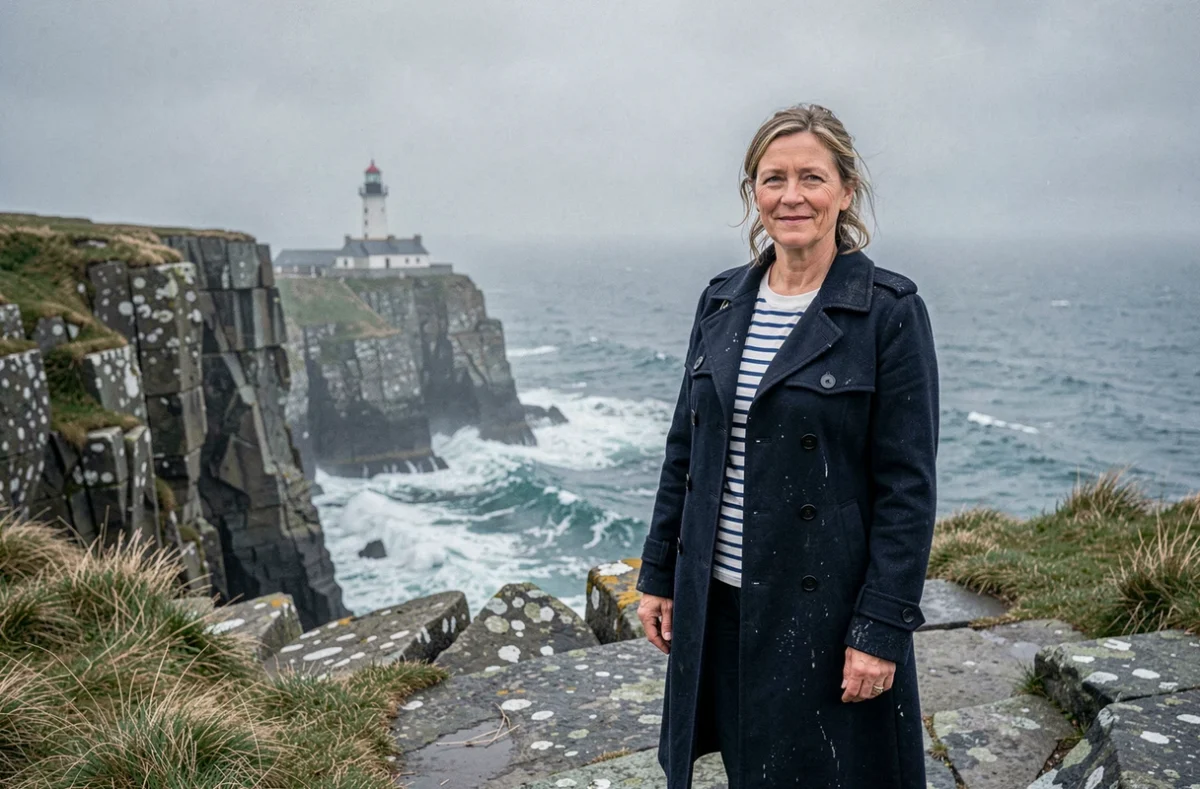
The cliffs of the Crozon Peninsula and those on the west coast of the South Island share a similar geological ruggedness. Both regions are exposed to powerful ocean winds that shape their low-growing vegetation. The Breton heathland and New Zealand tussock create strikingly similar horizons.
The comparison ends beneath the surface. New Zealand is an active volcanic country on the Pacific Ring of Fire. Brittany rests on an ancient granite bedrock that has remained stable for hundreds of millions of years. The landscapes look alike on the surface, but their geological origins are opposites.
This tension between visual similarity and profound difference sums up the journey between these two regions. In New Zealand, Breton travellers find familiar sensations—wind, rugged coastlines and changing light—while walking on radically different ground. It is precisely this contrast that makes comparing the two cultures so rich and so disorienting.