
A training plan copied from one person to another is a guarantee of a lottery. Some see their times soar while they ease off, while others exhaust themselves without progress despite weeks of extended effort. The certainties of yesterday are shattered: science disrupts fixed recipes, injecting nuance and customization into the daily lives of athletes.
To avoid injuries, the equation is no longer just a matter of volume or intensity. It’s the balance between load, recovery, and strengthening that makes the difference. Discoveries in physiology and biomechanics pave the way for precise adjustments. We refine, we measure, we modify. The goal: to find the balance point where performance rises without the body breaking down.
Understanding the scientific levers of running performance
Improving sports performance today relies on concrete data. Modern preparation revolves around measurement: every movement, every step, every heartbeat becomes information to exploit. Movement analysis, force sensors, electromyography—these are tools that shift training into another dimension. Artificial intelligence, by cross-referencing this data, reveals trends: asymmetries, weaknesses, areas to work on. It’s no longer a question of volume, but of precision.
But science does not stop at the mechanics of the body. Mental preparation takes center stage. Stress management, visualization, mindfulness: these practices, once marginal, are becoming performance levers. Research confirms it: the mind shapes endurance, modulates recovery, influences the quality of movement. Approaches validated by researchers like Mathias Pessiglione at Inserm, or by elite teams, notably the French Rugby Federation, demonstrate the power of this collective evolution.
Several players, like Science O Sport, offer support where individual measurement becomes the norm. Biomechanical tests, fatigue analysis, running rhythm studies: everything is scrutinized to build a customized protocol. Advances in neuroplasticity even offer new perspectives for enhancing decision-making and mental resilience.
Here are the axes that structure modern preparation:
- Precise association between physical and mental preparation
- Personalized biomechanical evaluation
- Stress management and adapted recovery protocols
Once separate, these pillars now come together in a coherent approach. The athlete moves forward, enlightened by science, aware of their margins and limits.
What targeted training to progress effectively?
Accumulating kilometers or endlessly repeating the same exercises is no longer the creed. Now, targeted training is based on biomechanical analysis and personalization. Monitoring through motion sensors, force platforms, or GPS allows for quantifying effort, adjusting load and intensity session after session. Training is no longer done blindly: every data point matters for progressing without exhausting oneself.
Physical preparation is organized into cycles: building endurance, working on power, then refining reaction speed. This segmentation aims to avoid wear and prioritize sustainable adaptations. Artificial intelligence, through data analysis, helps identify imbalances and target work where it will be most effective.
Training does not stop at the physical level. Cognitive exercises, like those offered by Vector Ball or Brain Ball, engage both body and mind simultaneously: decision speed, coordination, concentration. The use of virtual reality or video analysis provides immediate feedback on execution, sharpens tactical perception, and prepares for unexpected reactions.
Some practices structure this new approach:
- Rigorous personalization of loads and session content
- Integration of mental and cognitive training into the physical routine
- Combination of tracking and analysis technologies for continuous adjustment
Here, progress is built step by step, driven by rigor and nourished by innovation. At each stage, the athlete adjusts, corrects, refines, leaving stagnation behind.
Preserving the body: good practices and injury prevention
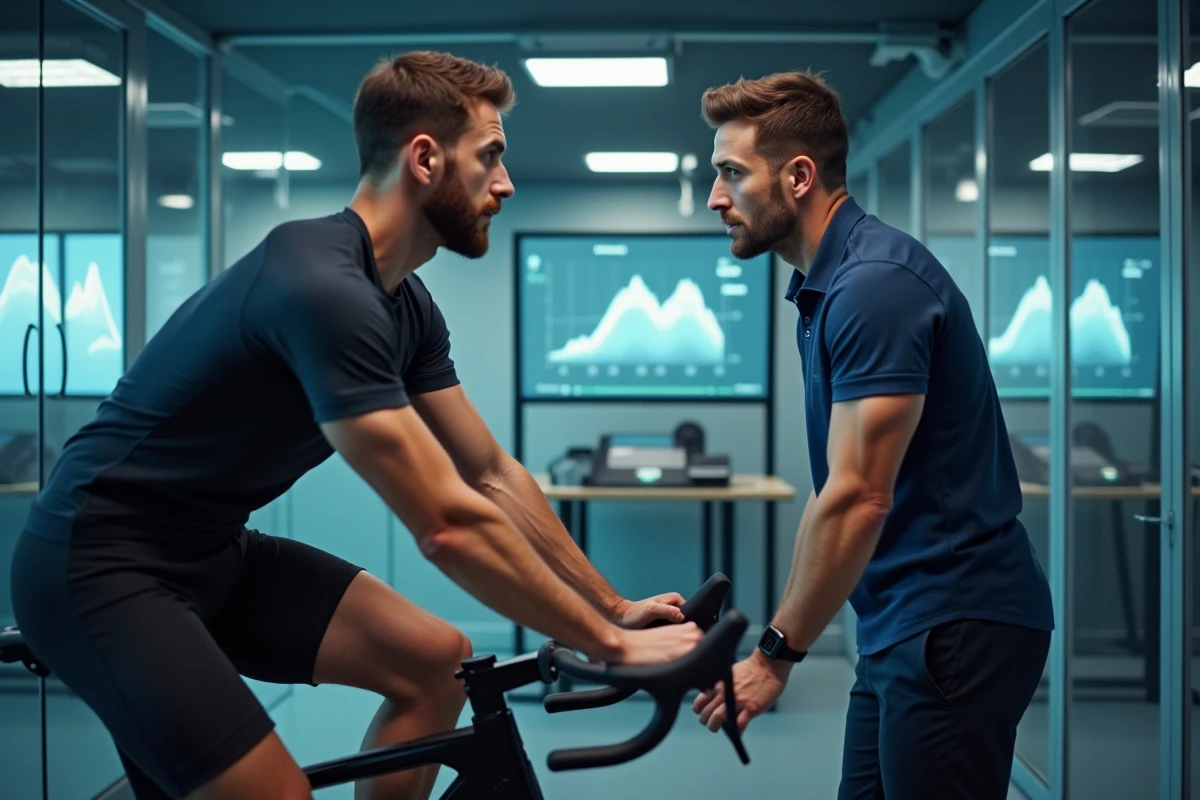
Preserving the body means being vigilant every day. Biomechanical analysis technologies and individualized monitoring change the game; preventing injuries becomes a proactive process, no longer a late reaction. Sensors, force platforms, and biofeedback provide precise information on the load endured, posture, or muscle fatigue. This feedback allows for immediate training adjustments, identifying weak signals before they turn into forced breaks.
Recovery establishes itself as a pillar of performance. Appropriate nutrition, controlled hydration, restorative sleep: these parameters, often underestimated, condition the ability to sustain efforts. A weakness in one of these levers weakens the entire system. Recovery protocols, such as monitoring heart rate variability or stress management work, rebalance the body and promote resilience.
Artificial intelligence adds an extra layer of refinement here. By cross-referencing training data, sleep quality, and nutrition, it paints a dynamic picture of physical state. Identifying imbalances, adjusting sessions, preventing overload: monitoring becomes personalized, responsive, focused on the athlete’s safety.
To strengthen this approach, here are the axes to prioritize:
- Muscle recovery optimized by sleep and appropriate nutrition
- Monitoring loads and detecting asymmetries specific to each athlete
- Using biofeedback to refine stress management
Injury prevention today relies on rigor, the ability to interpret the body’s signals, and the intelligent use of digital tools. Where improvisation once reigned, method now prevails: the athlete moves forward, protected, equipped to endure.