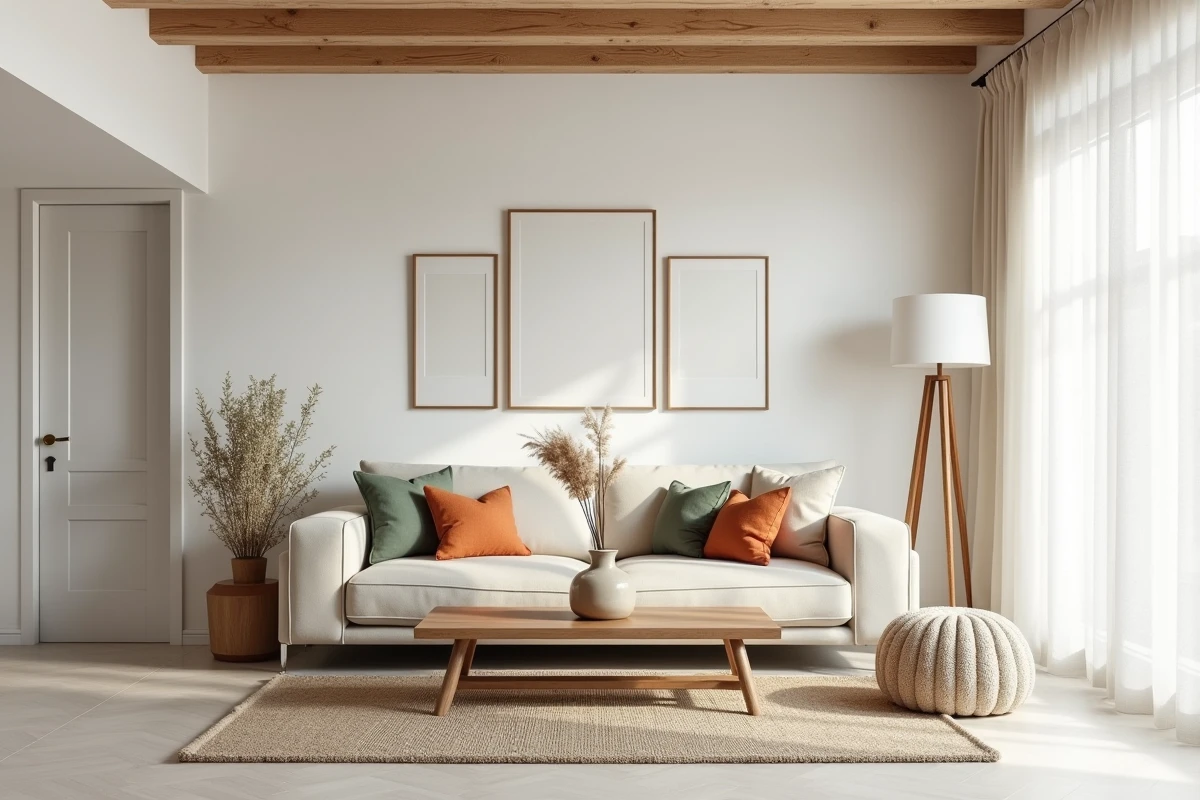
A living room wall that is peeling after two years, a sofa whose fabric cannot withstand cleaning, a trendy color that becomes tiresome in six months: we often start from these concrete disappointments to rethink our interior with style. Enhancing a space does not require an extravagant budget or a radical change, but rather choices of materials, lighting, and colors that stand the test of time.
Repairable materials: the decor trend that withstands daily life
When renting an apartment or living with children, the question is not which covering is the most beautiful, but which one can be repaired without having to redo everything. Since 2023, DIY stores in France have noted a growing interest in easy-to-maintain finishes, according to the report “The French and Their Home 2024” from the Leroy Merlin Habitat Observatory.
We are talking about lime, oiled wood, and untreated textiles. A lime plaster can be locally sanded. An oiled parquet can be sanded with fine sandpaper and then re-oiled in an hour. These materials forgive impacts, stains, and scratches because you can work on a specific area without having to redo the entire surface.
To explore decorating with Maison Pro, you will find ranges oriented towards these durable finishes, suitable for both the living room and the bedroom.
The benefit goes beyond practicality. A lime wall ages with deepening nuances. An oiled oak table top acquires a patina that laminate cannot replicate. The repairability of a material becomes a style criterion, not just a budget consideration.
Connected lighting and emotional design in the living room
We adjust the living room lighting based on what we are doing: reading, dining, watching a movie. The novelty is that systems like Philips Hue or Netatmo now allow automatic adjustment of intensity and color temperature according to the time, ambient noise level, or outside brightness.
Philips Hue introduced its SpaceSense functions and dynamic scenes in October 2023, which adjust lighting without manual intervention. Legrand/Netatmo published a usage study “Connected Home 2024” in June 2024 confirming the progression of these automated scenarios in French households.
What this concretely changes for decor
A connected light fixture does not replace a beautiful light fixture. First, we choose the shape, material, and visual presence of the object in the room. Connectivity then comes to modulate the atmosphere without touching the decor.
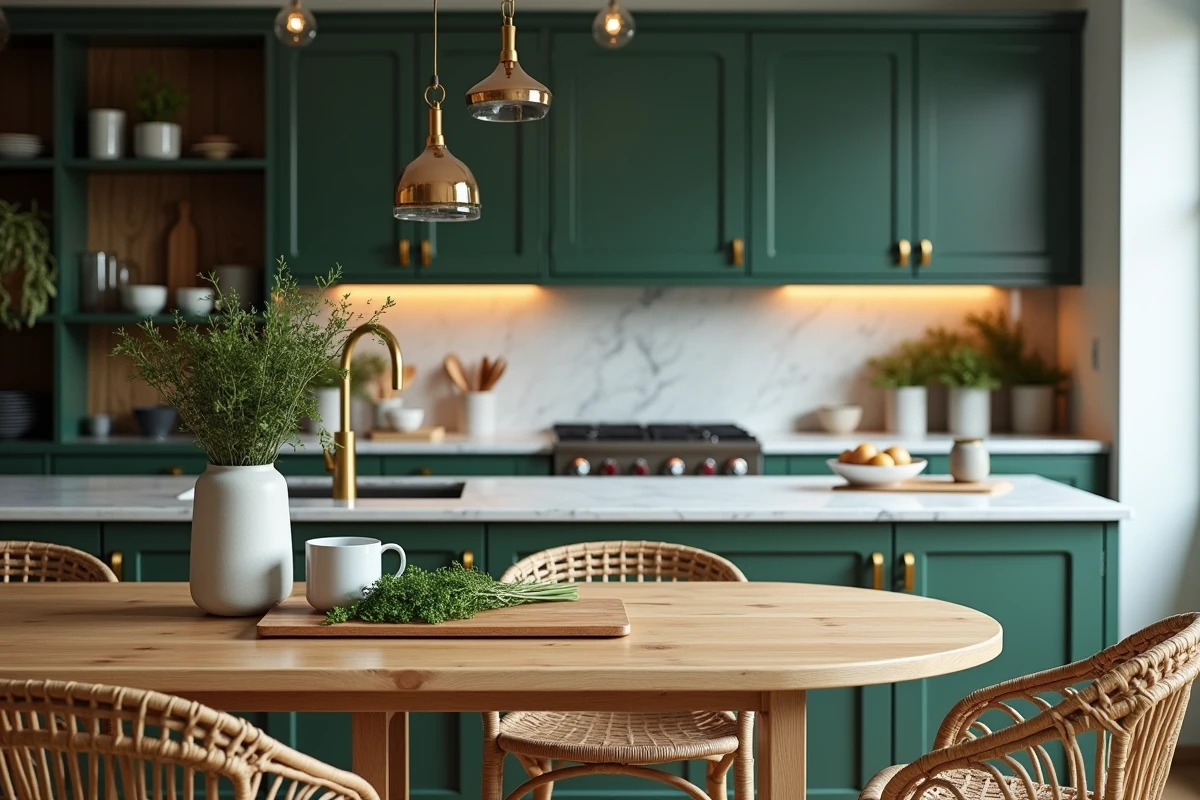
Well-controlled lighting transforms the perception of a space without moving a single piece of furniture. A living room painted in sage green appears warm under 2,700 K light in the evening, then fresh and bright at 4,000 K in the morning. You achieve two atmospheres in the same room, with the same furniture.
- Warm temperature (2,200-2,700 K) for evenings: highlights wood, brass, and natural textiles.
- Neutral temperature (3,500-4,000 K) for working or cooking: provides clarity to the actual colors of objects.
- Automated scenarios via sensors: the light follows the rhythm of the day without us thinking about it.
Wall decoration: invest in pieces that won’t be replaced every season
Rapid rotations of “color of the year” and small decorative objects pose a concrete problem: we accumulate, we store, we throw away. The current trend leans towards durable wall elements, chosen to last several years.
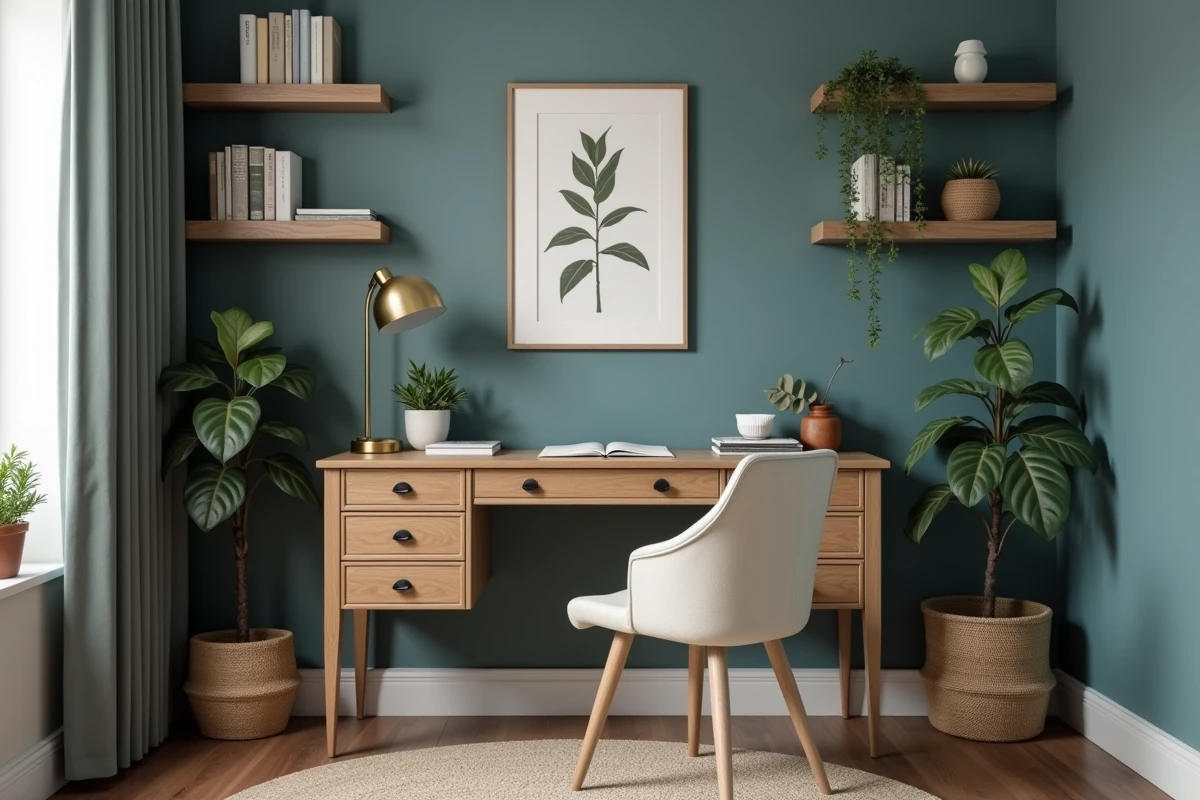
An original painting, a large framed photograph, or a quality textile tapestry gives the wall a stable identity. We build the rest of the room around this strong piece, rather than changing the wall decor with every new trend.
Art and photography: two approaches for a bedroom or living room
A single large format makes a bigger impact than an accumulation of small frames. In a bedroom, a black and white photo above the bed creates a clear focal point. In a living room, an abstract canvas in earthy tones anchors the color palette of the entire space.
Opinions vary on this point, but wall compositions like “gallery walls” with many small frames require precise alignment to avoid a cluttered effect. They are better reserved for hallways or entries, where the gaze passes without lingering.
Color and texture: associations that modernize an interior
Painting a wall is not enough. What gives character to a space is the meeting between a color and a texture. An olive green on a smooth wall produces a very different effect than the same green on a textured plaster.
- Terracotta on textured plaster: adds depth and a handcrafted look, suitable for both the living room and kitchen.
- Navy blue on molded woodwork: creates a contrast between the modernity of the shade and the classicism of the relief.
- Off-white on exposed stone wall: allows the material to speak without overwhelming the volume of the room.
- Sage green paired with natural linen: a soft palette, coherent from wall to textile, that unifies without monotony.
Matching the wall color with the fabric of the sofa or curtains avoids the “catalog” effect where each element seems chosen independently. We start with the wall, choose a fabric in the same color family, then break it up with a contrasting accent (cushion, ceramic, light fixture).
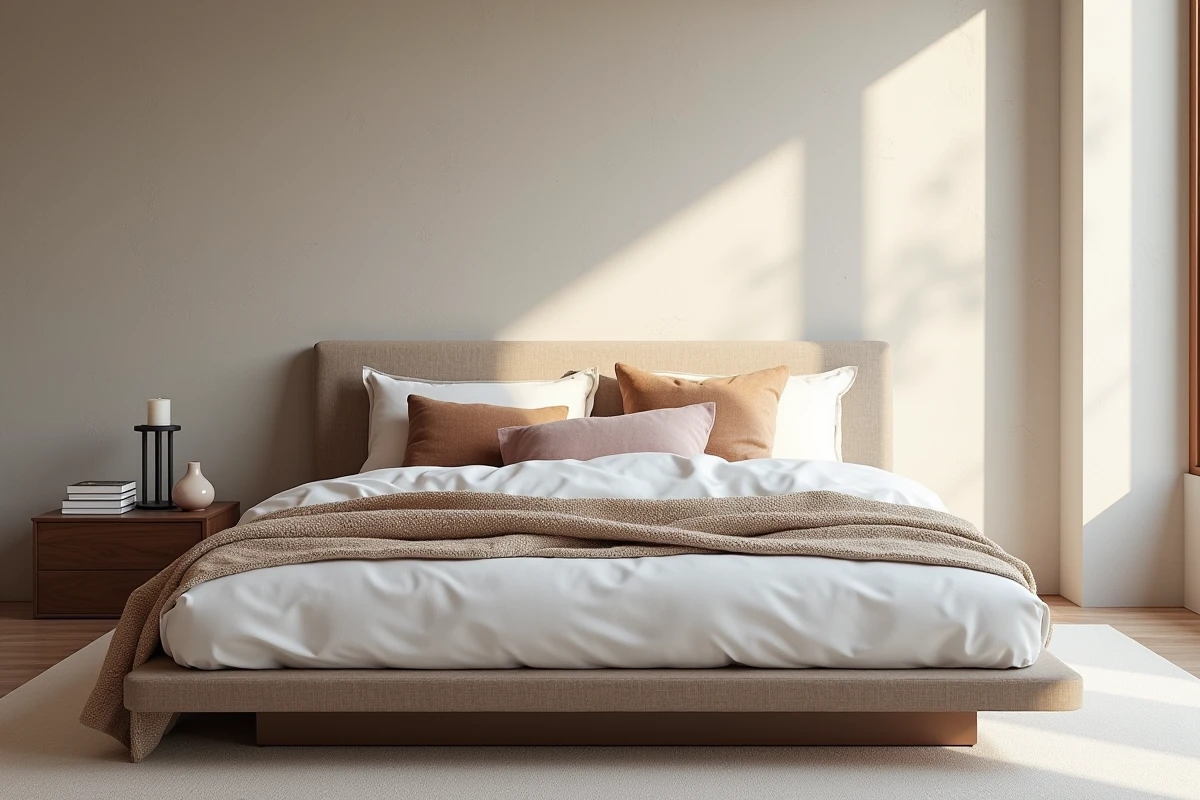
Enhancing an interior with originality relies less on the quantity of objects than on the coherence between materials, light, and color. A repairable plaster, lighting that adapts to the time of day, a strong wall piece, and thoughtful color-texture associations produce a more personal result than a complete makeover based on current trends.