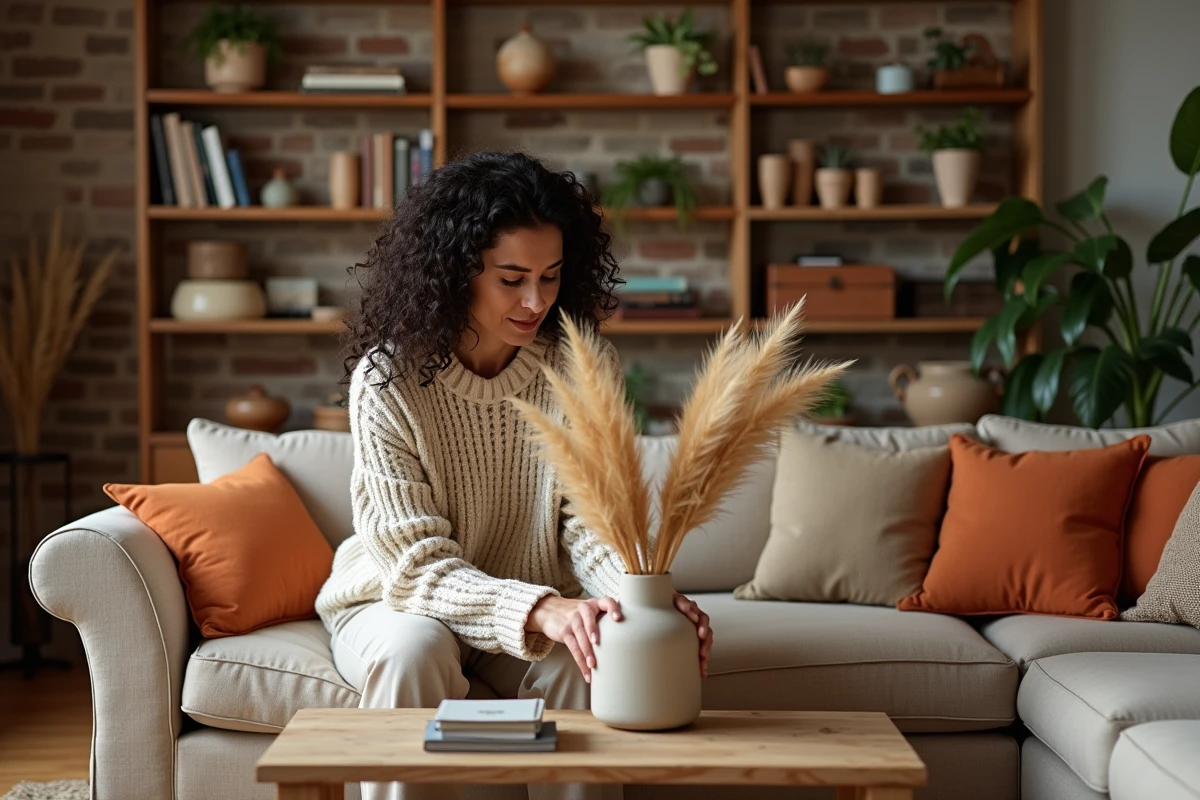
Transforming a house into a unique and warm place relies less on the accumulation of objects than on structural choices: materials, light, relationship to the outside. Each decision alters the atmosphere of a room, the comfort felt on a daily basis, and the way a living space tells something about its occupants.
Biophilic design: connecting the interior of the house to the living world
Biophilic design goes beyond the mere presence of green plants on a windowsill. It involves integrating nature into the very architecture of the place: abundant natural light, raw materials, unobstructed views of the garden or surrounding vegetation, visual continuity between inside and outside.
In practical terms, this can take the form of a bay window that extends the living room onto a terrace, a wall of exposed stone in the entrance, or a solid wood floor with visible knots and variations in color. The goal is to stimulate the senses without overwhelming the space.
Plants play a role, but not the one usually assigned to them. Rather than multiplying pots on every available surface, it is better to choose a few large plants (a ficus, an indoor olive tree) that create a focal point in the room. A garden visible from the kitchen or living room reinforces this connection without cluttering the interior. To delve deeper into these reflections on home layout, you can explore the website www alephzarro com which gathers resources on the subject.
Tactile materials before patterns: sustainable comfort in decoration
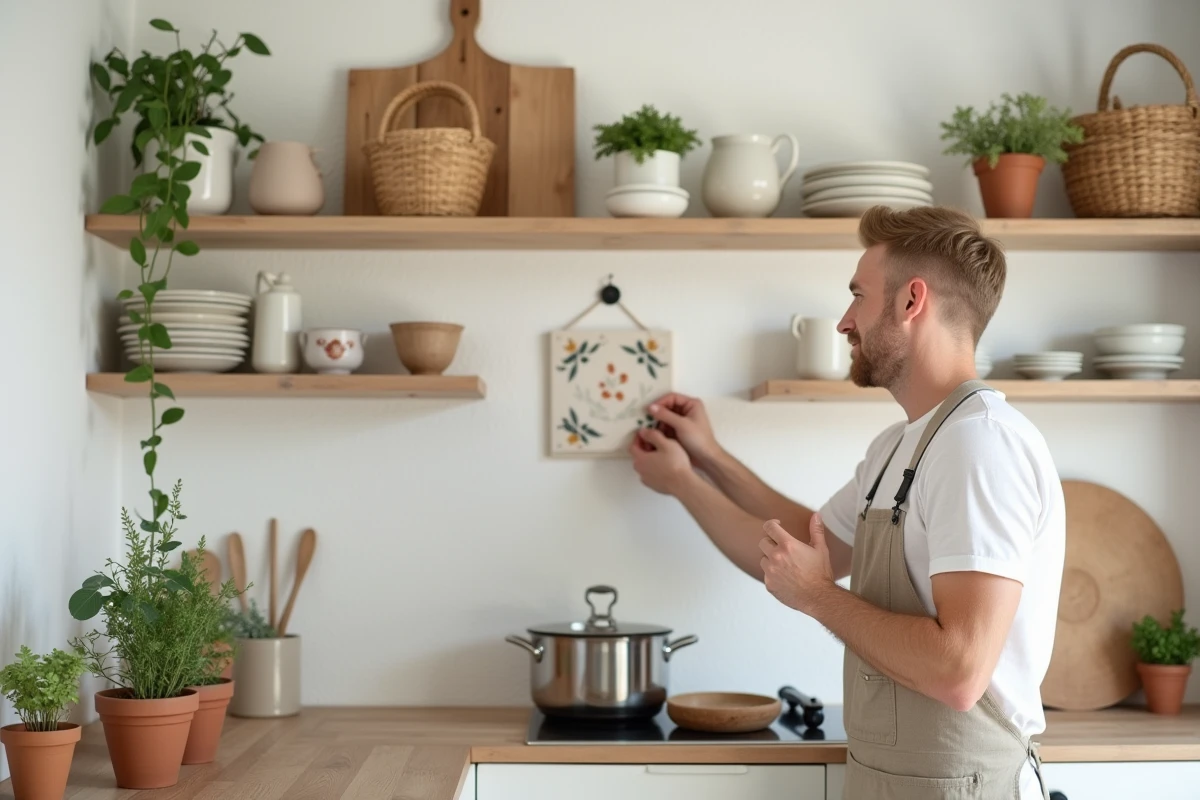
Recent trends in interior decoration are moving away from purely visual logic. The dominant approach today places material before pattern: what matters is what the hand perceives as much as what the eye sees.
Looped wool on an armchair, washed linen of a curtain, raw ceramic of a vase, textured wood of a console: these elements generate a lasting sense of comfort, where a trendy printed cushion eventually becomes tiresome in a few months.
Choosing materials by room
Not all materials are suitable everywhere. The living room, a space for relaxation, tolerates thick textiles and soft surfaces. The kitchen and bathroom require moisture-resistant materials: natural stone, porcelain stoneware, treated wood.
- Living room: linen, looped wool, corduroy for seating and cushions; solid wood or rattan for accent furniture
- Bedroom: washed cotton for bed linens, thick wool rugs at the foot of the bed, headboard in raw wood or caning
- Kitchen: countertop in stone or oiled wood, backsplash in stoneware tiles, handcrafted ceramic tableware
- Entryway: brass or wrought iron hooks, patinated wood bench, mirror with a rattan or oak frame
Harmony comes from the coherence of textures between rooms, not from uniformity. Varying materials while staying within a natural palette (earth tones, off-white, stone gray) creates a common thread without monotony.
Layered lighting: structuring the atmosphere room by room
A single ceiling light in the center of a room produces flat light that erases volumes and textures. Layered lighting involves overlapping three types of light sources to modulate the atmosphere according to the time of day.
The three levels of light
The first level is ambient light, diffuse and soft. It comes from floor lamps, wall sconces directed towards the ceiling, or fabric-shaded pendants. Its role is to replace natural light at the end of the day without being harsh.
The second level is functional lighting: reading lamp near the sofa, adjustable spotlights above the countertop, reading light attached to the headboard. It targets a specific area for a given activity.
The third level is decorative light: candles, discreet garlands, table lamps with tinted glass. This last level transforms a functional living room into a warm space as soon as night falls.
A common pitfall is neglecting the last two levels. A room equipped only with a ceiling light and a floor lamp will always lack depth, regardless of the quality of the furniture or decor.
Narrative personalization of the living space: beyond catalog style
A warm interior is one that tells a unique story. The most recent content on decoration emphasizes the importance of narrative personalization: objects brought back from travel, carefully framed family photographs, recovered and restored antique furniture, artworks chosen by taste rather than trend.
This approach contrasts with “turnkey” decoration where every element comes from the same catalog. An old mirror found at a market, leaning against the wall of an otherwise contemporary living room, creates a much more interesting visual tension than a perfectly coordinated set.
Some principles for personalizing without cluttering
- Limit displayed objects to those that have a story or function: a travel souvenir, a handmade pottery piece, an art book open on a coffee table
- Group small objects in threes or fives on a tray or shelf rather than scattering them throughout the room
- Reserve one wall for a display of varied frames (sizes, styles, subjects) rather than spreading a single frame in each room
Elegance comes from restraint rather than abundance. An interior overloaded with decorative objects, even beautiful ones, tires the eye and dilutes the identity of the place.
The transformation of a house into a unique space ultimately comes down to three choices: favoring materials that age well over fleeting trends, layering light sources to modulate the atmosphere, and leaving space for objects that have personal meaning. The rest, the color of the walls, the style of the furniture, the arrangement of the furnishings, naturally follows.