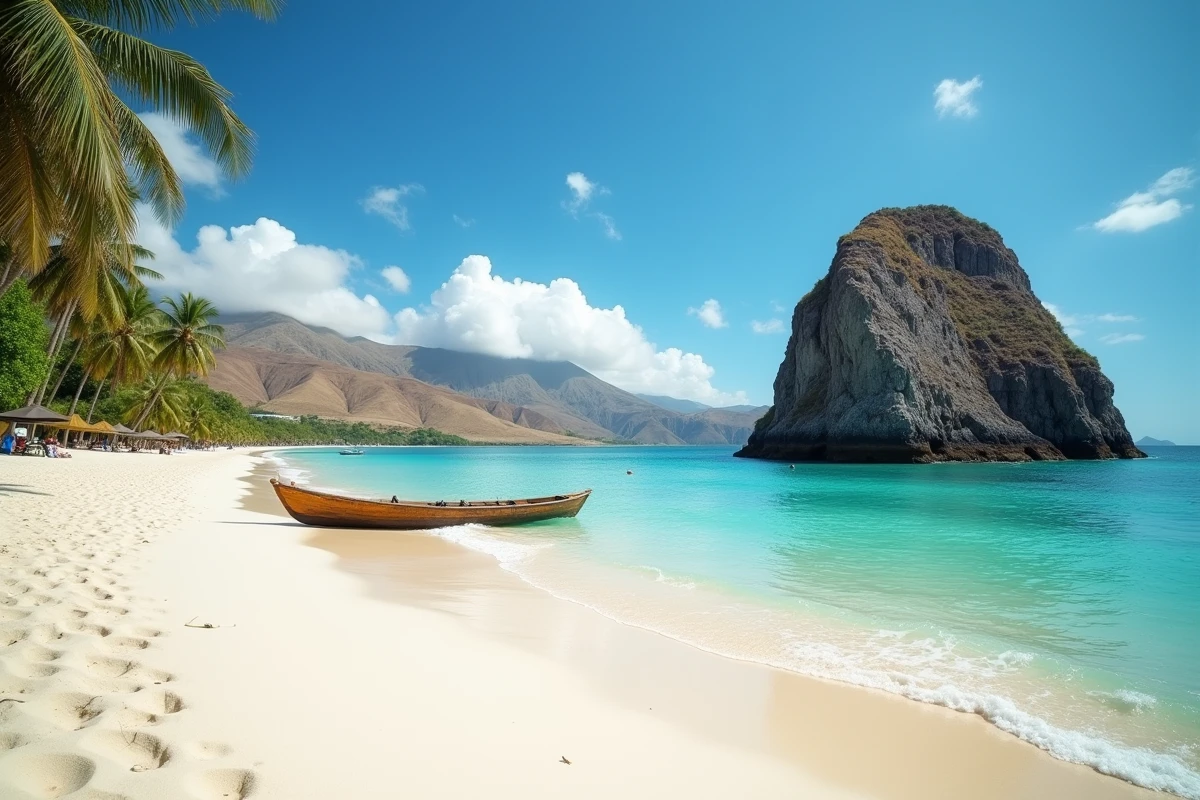
When you arrive in Kuta Lombok, the first surprise lies in the geography: most of the remarkable beaches in the area are located within such a short distance that you can visit three or four in the same day, with a scooter at hand. The roads in the south of the island have been significantly improved in recent years, and the signage makes it easy to navigate even without GPS.
Before listing beach names, it’s worth understanding how this micro-radius actually works.
Scooter micro-radius from Kuta: the logistics that change everything
The southern coast of Lombok concentrates its most beautiful bays along a coastal strip that can be traversed in less than twenty minutes by scooter from the center of Kuta. Tanjung Aan to the east, Selong Belanak to the west, Mawun in between: you can move from one to another via paved roads without any particular difficulty.
This logistical detail has a direct consequence on the organization of a stay. Instead of dedicating an entire day to a single beach, stopping at two or three places in the morning allows you to enjoy different conditions (waves, crowds, sun orientation) and keep the afternoon free for a village visit or a surf session.
It is recommended to rent the scooter the night before to leave early. Rental companies in Kuta offer daily rates, and most beaches do not have paid parking, except for Tanjung Aan where a modest fee is requested at the entrance. For those who wish to delve deeper into the itinerary, the beaches to discover around Kuta Lombok are detailed with access and distances from the village.

Tanjung Aan and its role in organized tours of southern Lombok
Tanjung Aan appears in all travel narratives, but one aspect remains under-documented: this beach has become the central point of private excursions sold by tour operators. Tours combining the traditional village of Sade, the center of Kuta, and the southern coast almost systematically stop at Tanjung Aan, presented as the longest stretch of white sand in the area.
For the independent traveler, this means one concrete thing: the beach fills up in waves, at fixed times, when minibuses drop off their groups. By arriving before nine o’clock or after four o’clock, you can find a calm that midday photos do not show.
What distinguishes Tanjung Aan on the ground
The sand here is unique, with a grainy texture reminiscent of pepper grains in some areas. The bay forms a protected arc where the waves remain gentle, making it accessible for swimming even for families with children. Two hills frame the beach and provide an unobstructed viewpoint over the entire bay.
Reviews vary regarding cleanliness depending on the season: during the monsoon, debris carried by currents can accumulate on the shore. Off-season, the sand remains impeccable.
Selong Belanak and Mawun: two southern beaches, two atmospheres
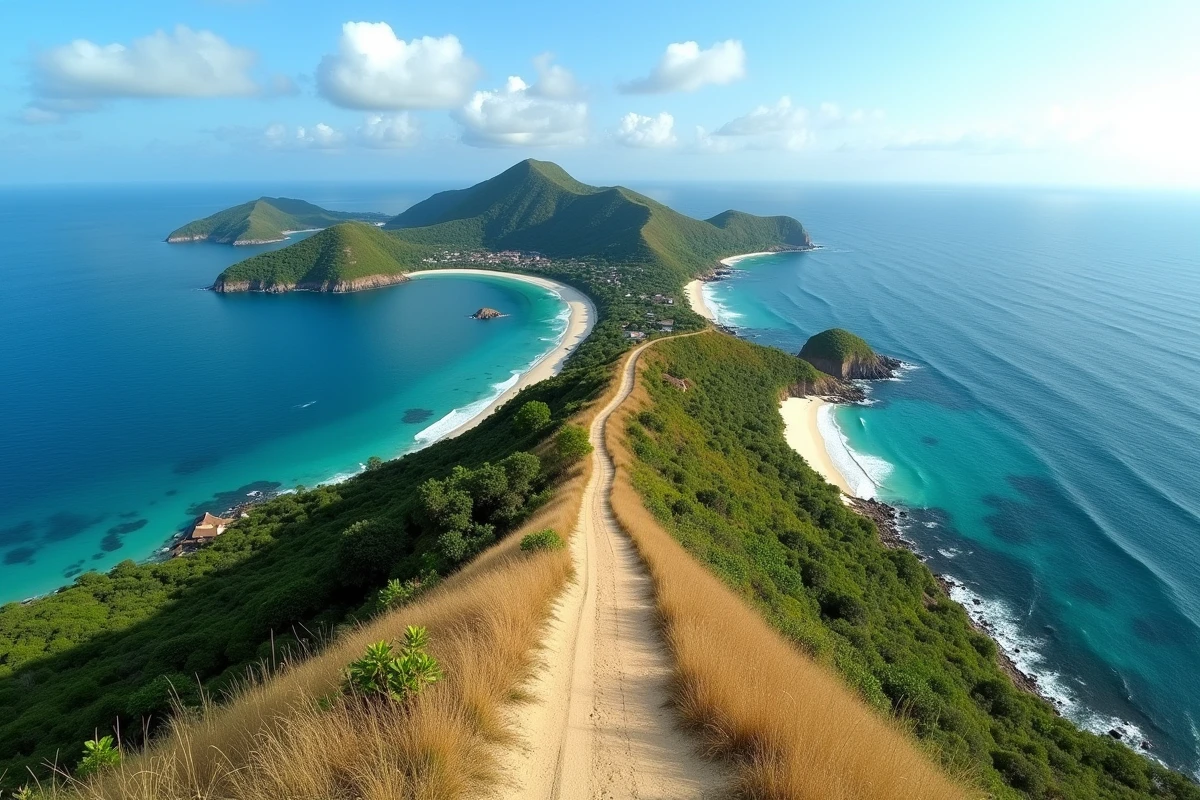
These two beaches are among the most photographed in Lombok, and for good reason. Their common point: turquoise water in a crescent-shaped bay bordered by hills. Their difference lies in usage and attendance.
Selong Belanak, the surf and learning beach
Selong Belanak attracts a community of beginner and intermediate surfers. The wave breaks far from the shore on a sandy bottom, which limits risks. Several local surf schools set up their boards directly on the sand. You also encounter Indonesian families on weekends, which gives the place a lively atmosphere far from the cliché of the deserted beach.
The best time to surf is in the morning, when the offshore wind maintains clean conditions. In the afternoon, the onshore wind makes the session less enjoyable, but swimming remains possible in the protected part of the bay.
Mawun, tranquility in exchange for isolation
Mawun requires a bit more effort. The road leading there crosses dry hills and opens onto a tucked-away bay, narrower than Selong Belanak. Attendance remains significantly lower, even in high season. No surf school here, no numerous street vendors: people come for the tranquility and to swim in calm water.
A practical point: there are no reliable dining facilities in Mawun. Be sure to bring water and a snack before heading out, or combine the visit with lunch at Selong Belanak, accessible in about ten minutes by road.
Less-known beaches east of Kuta Lombok: Are Guling and Seger
Guides often focus on the trio of Tanjung Aan, Selong Belanak, and Mawun. Two other beaches are worth a detour, especially for those staying several days in the area.
- Are Guling, accessible via a track from the main road, offers a more rugged landscape with low cliffs and strong waves. The spot attracts experienced surfers and a few local fishermen. No natural shade, so hats and sunscreen are mandatory.
- Seger Beach is located just a few minutes from Kuta, almost in continuity with the village. The beach is small, bordered by a grassy hill (bukit Merese) from where the sunset over the southern coast is worth the trip.
- Tampah Beach (also called Pantai Lancing), located about twenty minutes northwest, is starting to appear in recent travelers’ recommendations as a still very uncrowded alternative.
Exploring these secondary beaches provides a more complete view of the southern coastline and allows you to avoid the concentration on the same spots that everyone visits.
Kuta Lombok as a base for your stay: what you need to know before booking
Kuta has repositioned itself in recent years as a true hub for the south of the island, combining access to beaches, surf offerings, and proximity to traditional Sasak villages. There are accommodations at all price points, from local warungs to restaurants run by expatriates, and a small but present French-speaking community.
The village is nothing like Kuta Bali. No beachfront nightclubs, no heavy traffic. The atmosphere remains that of a developing Indonesian coastal town, with its construction sites, sometimes dusty roads, and occasional power outages.
To effectively explore the area, three to four nights are enough to cover the main beaches and a trip inland (Tetebatu, rice fields). Beyond that, you start to revisit the same bays, unless surfing occupies part of your daily program. Southern Lombok rewards travelers who accept simple comfort in exchange for some of the most preserved coastal landscapes in the Indonesian archipelago.