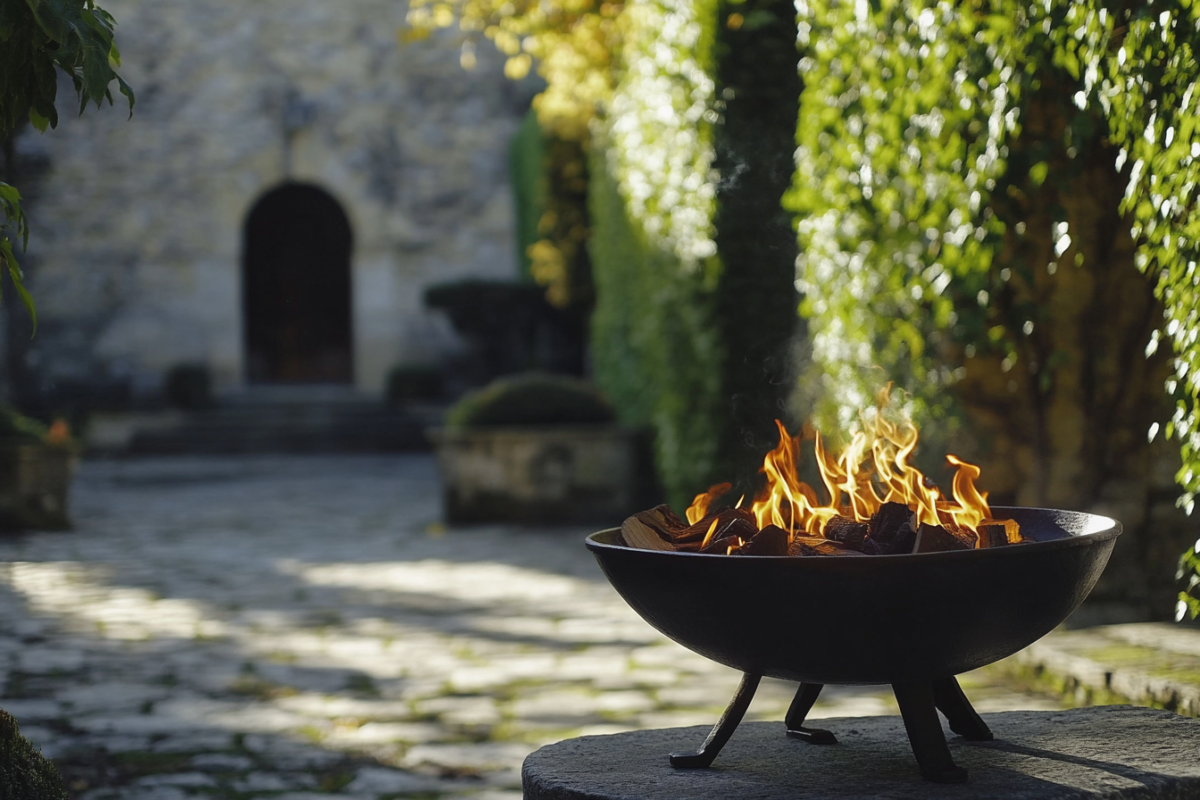
The brazier, this fascinating object, is often synonymous with friendly warmth and shared moments under the stars. Yet, behind this name that evokes both comfort and tradition lies a linguistic history as rich as it is captivating. To understand why this heating and cooking utensil is called a brazier, one must go back in time, exploring the origins of the word, its evolutions, and the cultural differences it embodies. Let yourself be carried away by this exploration that will reveal the profound meaning and various facets of this both utilitarian and emblematic object.
Historical and Etymological Origins of the Word Brazier
The word brazier draws its roots from different cultures and languages. Its history dates back several centuries and takes us on a journey through time.
The earliest traces of the term can be found in the Spanish language, where brazier refers to a metal container used to hold embers. This idea of ember is central, as it is found in the medieval Latin word brasarium, which also evokes warmth and fire. The use of this object was common in households to heat rooms during the cold months. Families would gather around it, thus creating a space of conviviality and sharing.
In other cultures, similar terms designate objects with close functions. For example, in ancient Persia, a similar device called manqal was also used to heat homes. This type of heating was ubiquitous in civilizations where fire represented not only a source of warmth but a vital element of domestic life.
The Brazier Through the Ages: A Cultural Journey
Each era has redefined the use and perception of the brazier, transforming it from a simple heating tool to a symbol of conviviality.
- In the Middle Ages, the brazier was often used in castles and manors to warm large reception halls. It became a symbol of social status, with the most ornate models reserved for the aristocracy.
- During the Renaissance, the craftsmanship surrounding the brazier took on a new dimension. The models became more refined, featuring complex artistic patterns that showcased the skills of the artisans of the time.
- In modern times, the brazier has expanded its use to become a garden element. Today, it combines aesthetic and practical functions, serving as both a heating object and outdoor decoration.
Over time, its symbolism has also evolved. It is no longer just a tool but a true gathering object, where people come together to share precious moments with family or friends.
The Brazier in the French Language: A Semantic Evolution
The French language has also added its touch to the brazier, integrating it over the centuries into its vocabulary and daily use.
Initially, the word was borrowed from Spanish during cultural and commercial exchanges. The concept of domestic warmth was universal, and the brazier easily integrated into French homes. Over the years, the term has evolved to include variations like barbecue brazier, marking its adaptation to modern culinary uses.
With the advent of outdoor spaces and shared moments in the open air, the brazier has become a staple in French gardens and terraces. Its function has been reinvented, transitioning from a simple heating device to a means of gathering around delicious grilled food.
A Multi-Faceted Object: From Tradition to Innovation
The ability of the brazier to adapt to contemporary needs makes it a unique and timeless object.
Modern functionality: Today, the brazier does not just heat. It transforms into a plancha or barbecue, catering to culinary desires and current trends. Modern designs include various materials like corten steel, weather-resistant, and offering a refined aesthetic.
Conviviality: Beyond its practical functions, the brazier is a social stimulator. It invites relaxation, discussion, and the creation of unforgettable memories. Whether on a cold winter evening or a warm summer night, it remains at the center of sharing moments, bringing generations together around its soothing warmth.
The interaction between tradition and modernity, between necessity and pleasure, is at the heart of the evolution of the brazier. It embodies a harmonious fusion of cultural heritage and technical innovation.
Through the ages, the brazier has managed to preserve its essence while reinventing itself. It continues to gather, warm, and delight with its warm and welcoming presence. By embracing both its origins and its new incarnations, it remains a living symbol of conviviality and human warmth.