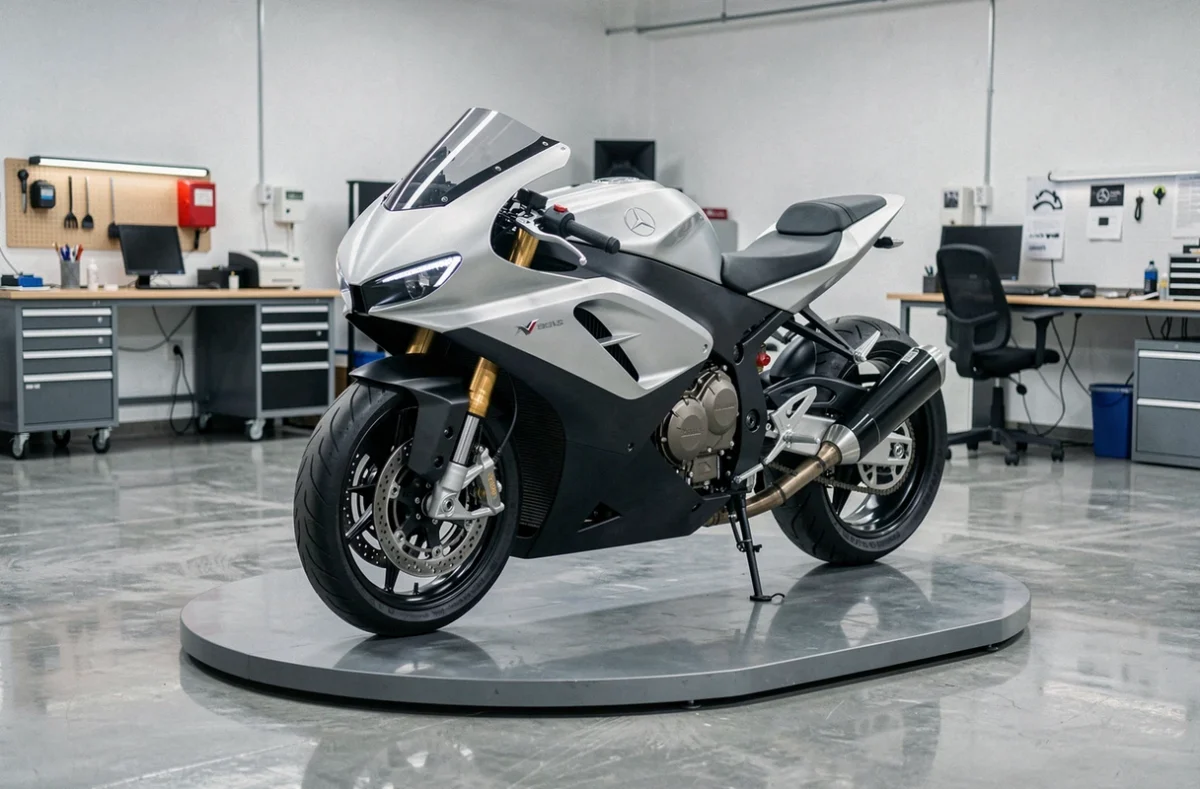
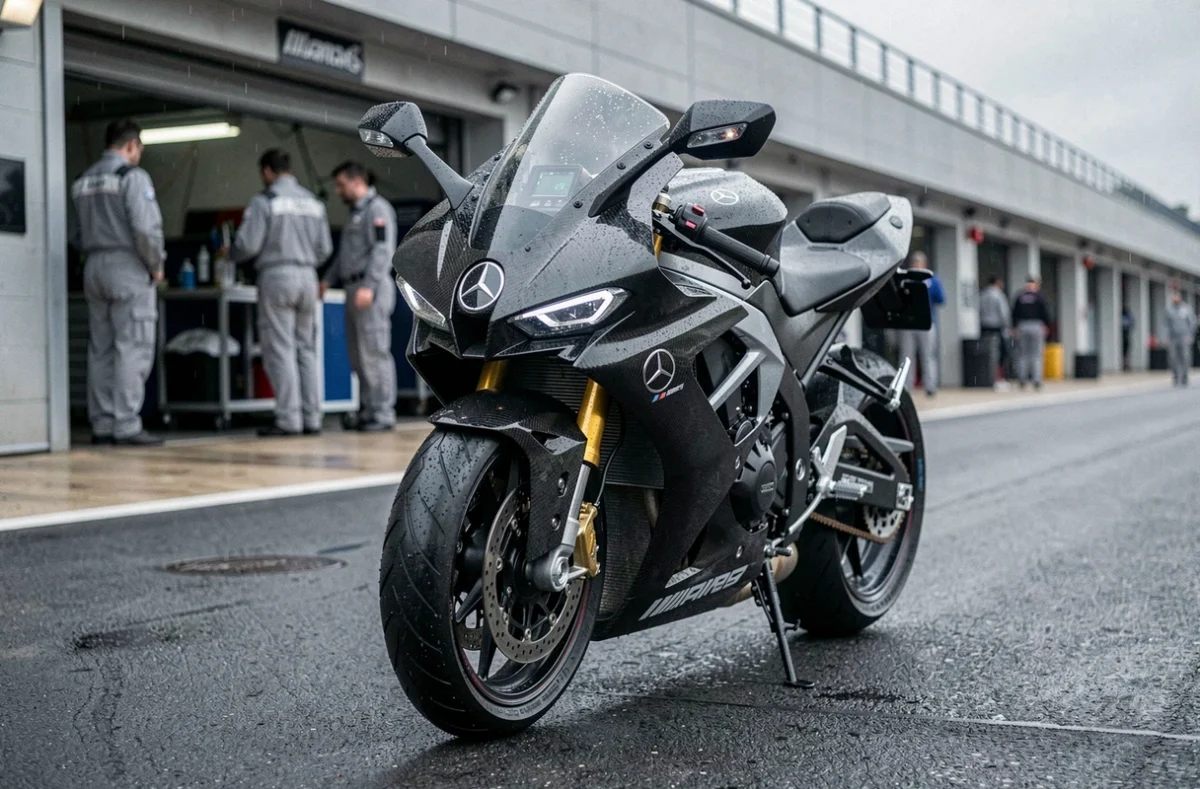
Search for “Mercedes-Benz motorcycle” and you’ll find spectacular 3D renderings, YouTube videos titled “2027 Mercedes-AMG Grand Touring,” and superbike images emblazoned with the three-pointed star. The problem is that none of these posts links to an official announcement from the Stuttgart-based automaker. Mercedes-Benz has never announced plans to produce a motorcycle, and the confusion between independent designers’ concepts and real industrial projects needs clearing up.
What it takes to go from a logo on a fairing to a road-legal motorcycle
An automaker looking to sell a motorcycle can’t simply slap its badge on a prototype. It takes a complete industrial process: type approval under European standards (Category L for two-wheelers), a dedicated sales and after-sales network, and, above all, a manufacturing partner capable of mass production.
BMW did it with its Motorrad division, established a century ago. But Mercedes has never owned a motorcycle factory. No recent patents filed by Daimler or Mercedes-Benz Group AG relate to a two-wheeler chassis or engine. Mercedes’ official communications present modular electric and combustion powertrains for its vehicles, with no mention of a motorcycle range.
To explore the reality of the Mercedes-Benz motorcycle, it quickly becomes clear that the gap between a digital rendering and a vehicle riding on public roads remains considerable.
The concrete steps a project would need to take
- An official announcement from the Mercedes-Benz Group, shared through its corporate channels (media.mercedes-benz.com), with a development timeline
- An industrial partnership with an existing motorcycle manufacturer (as with MV Agusta, but this time involving joint development rather than simply acquiring a stake)
- A European type-approval process, including crash tests, Euro 5+ emissions standards, and validation of the chassis and running gear
- Integration into the Mercedes dealership network or the creation of a separate sales channel, with mechanic training and spare-parts inventory
None of these milestones has been reached to date.
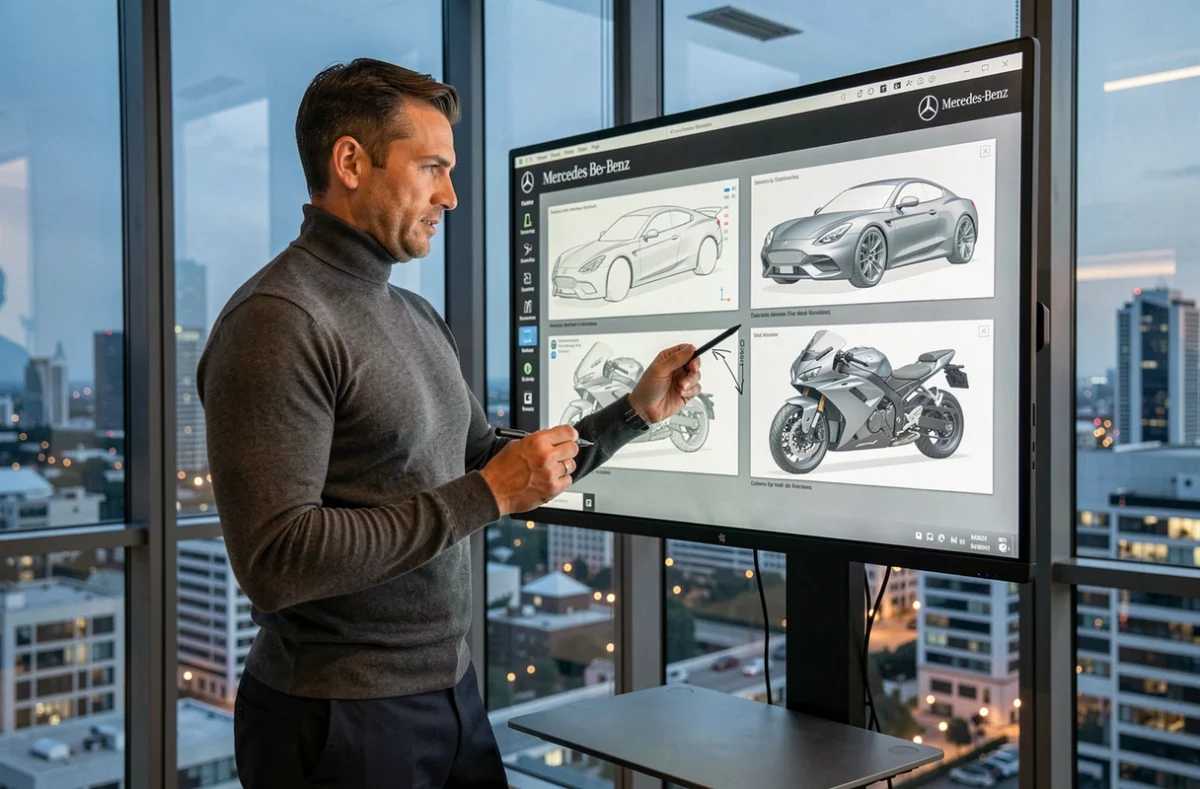
Mercedes-AMG and MV Agusta: the only verifiable foray into the world of motorcycles
The only concrete link between Mercedes and the motorcycle world dates back to 2014. Mercedes-AMG acquired a 25% stake in MV Agusta, the Italian manufacturer of high-end sport motorcycles based in Varese. The investment was part of a co-branding strategy: pairing AMG’s prestige with existing motorcycles, not designing a two-wheeler from scratch.
The collaboration led to a few joint marketing initiatives. In 2017, Mercedes-AMG sold its entire stake to ComSar Invest. The partnership lasted just three years.
Since then, MV Agusta has seen further changes in ownership. KTM acquired a 25.1% stake in the Italian manufacturer in 2022, then increased its holding to 50.1% in 2024. Mercedes no longer has any ownership ties to MV Agusta or to any other known motorcycle manufacturer.
What this experience reveals about Mercedes’ strategy
The MV Agusta episode shows that Mercedes tested the motorcycle market through financial investment, without ever committing its own engineering capabilities. Three years as a minority shareholder, no engine technology transfer, no shared production line. This is a far cry from the kind of industrial commitment BMW has made with Motorrad or Honda with its integrated motorcycle division.
The 2017 exit suggests that the return on investment or strategic fit wasn’t there. Mercedes chose to focus its resources on cars, particularly the shift to electric vehicles and the move upmarket for its sedans and SUVs.
YouTube renderings and AI concepts: why the confusion persists
Videos circulating on YouTube (such as those titled “2027 Mercedes-Benz Revenge Motorcycle” or “Mercedes-AMG Grand Touring”) rack up millions of views. They have one thing in common: none is produced or approved by Mercedes-Benz. They are creations by channels specializing in futuristic concepts, often generated using AI or 3D modeling.
The process is simple. A designer creates a realistic rendering, adds the Mercedes logo, and uses a title that suggests it’s an official model. The platform’s algorithm does the rest. The word “revealed” in a title doesn’t mean the automaker has actually revealed anything.
For motorcycle enthusiasts looking for reliable information, it can be hard to tell the difference between a fan-made concept and an announcement from a manufacturer when scrolling through a feed of videos. One simple clue: if the source isn’t the Mercedes-Benz Group’s corporate website or an official trade show (EICMA, Intermot), the project doesn’t exist as an industrial product.
Mercedes-Benz motorcycle: what could make the project plausible in the future
We can’t say that Mercedes will never build a motorcycle. But we can outline what would need to change for the idea to become credible.
The first sign would be a technical partnership with an established motorcycle manufacturer—not a financial investment like the one in 2014, but a co-development agreement involving Mercedes engineers. The second would be the emergence of patents filed by Mercedes-Benz Group AG in the field of motorized two-wheelers.
The premium motorcycle market represents modest sales volumes compared with SUVs or luxury sedans. For Mercedes, whose stated strategy focuses on moving upmarket in the automotive sector and electrification, diverting engineering resources to a niche segment would require a clear shift in direction, reflected in the group’s communications.
For now, the Mercedes-Benz motorcycle remains a digital design exercise. Until an official announcement, an identified manufacturing partner, or a type-approval process proves otherwise, 3D renderings will remain just that—3D renderings, however appealing they may be.