Pool owners often confuse two distinct problems under the same term: “worms” (insect larvae that colonize the water) and “glass” (filter media granules that end up at the bottom of the pool after a filter malfunction). These two situations have neither the same causes nor the same solutions, but they share a common point: a late intervention worsens the problem and complicates the restoration of the pool.
Skimmer breakage and filter glass in the pool: a mechanical problem above all
The widespread use of filter glass instead of sand in pool filters has created a new type of inconvenience. Some owners find glass beads or granules at the bottom of the pool, sometimes in quantities visible to the naked eye. The common reaction, using a robot or vacuum cleaner, does not solve anything as long as the cause is not addressed.
Feedback from pool support groups converges: the presence of glass in the pool is almost always linked to a breakage of the skimmer or diffuser inside the filter. The cracked part allows glass particles to pass into the return circuit, which sends them directly back into the water. As long as the defective part is not replaced, the glass will continue to return after each filtration cycle.
The correct procedure for removing worms and glass from the pool involves a complete inspection of the filter. The tank must be completely drained, each skimmer and the central tube (diffuser) examined, and then recharged with clean glass after replacing damaged parts. A simple cleaning of the bottom is not enough and gives the misleading illusion of a problem solved.
Tiger mosquito larvae in the pool: an underestimated health issue
The “worms” that appear in a pool’s water are not worms in the zoological sense. They are mostly insect larvae, primarily mosquitoes or chironomids. Several regional health agencies have been reminding since 2023-2024 that the small red or black worms observed in the skimmers are very often tiger mosquito larvae (Aedes albopictus).
The risk is not limited to visual inconvenience. The tiger mosquito is a vector for dengue, chikungunya, and Zika. A poorly maintained pool, with halted filtration or insufficient disinfectant levels, provides a favorable breeding ground. Just a few milliliters of stagnant water are enough for the female to lay her eggs.
Differentiating larvae to adapt treatment
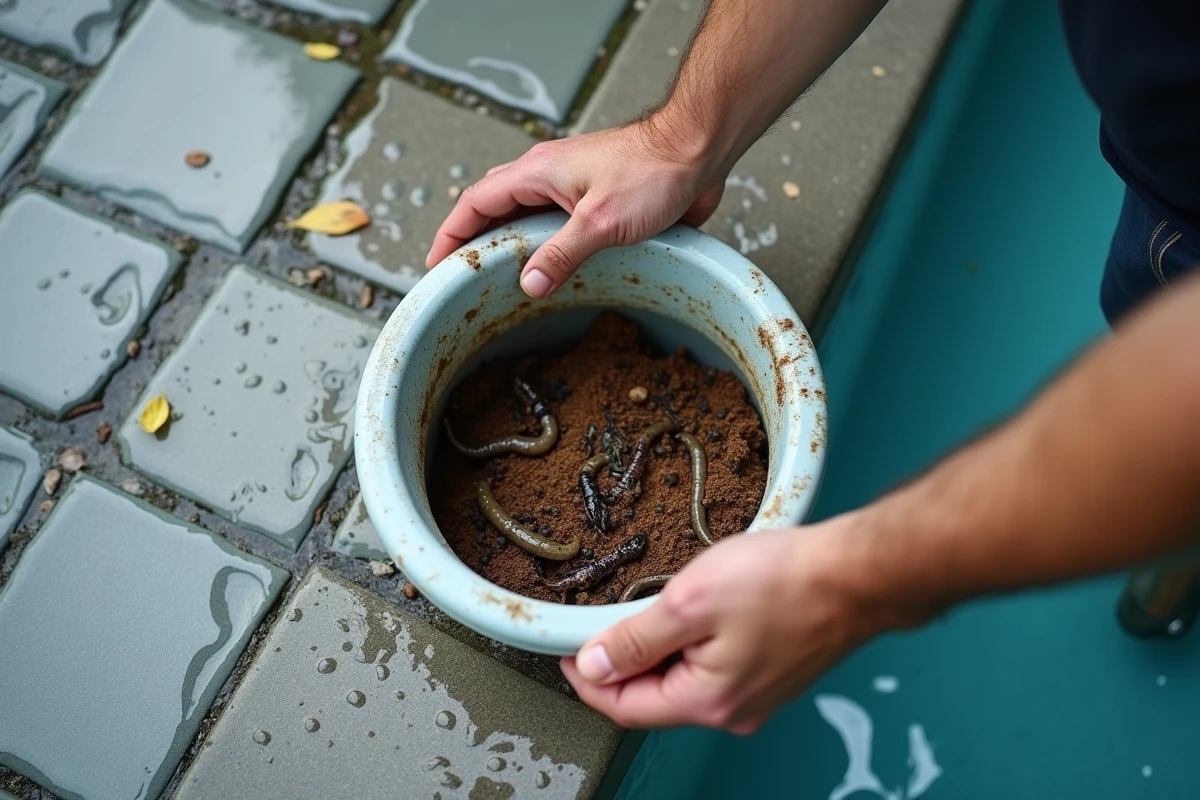
Mosquito larvae typically hang head down at the surface and exhibit a characteristic wriggling movement. Red worms, often chironomid larvae, tend to stay at the bottom or cling to the walls. White worms may be nematodes, which are rarer in properly chlorinated pools.
- Mosquito larvae: translucent to brownish, visible at the surface, sensitive to chlorine and water movement
- Chironomid larvae (red worms): attached to the bottom or walls, more resistant, require mechanical brushing in addition to chemical treatment
- Nematodes (white worms): infrequent in properly treated water, their presence indicates a prolonged imbalance in water chemistry
Shock chlorine treatment and continuous filtration: the protocol for eliminating worms
The treatment begins with a check of the water parameters. A pH between 7.0 and 7.4 ensures the effectiveness of chlorine. Outside this range, even an overdose of chlorine loses a significant part of its disinfecting power.
A shock chlorine treatment eliminates the majority of larvae within a few hours. The dosage depends on the pool’s volume and the product used. After the shock, filtration must run continuously until the water becomes perfectly clear, which can take from twelve to forty-eight hours depending on the severity of the infestation.
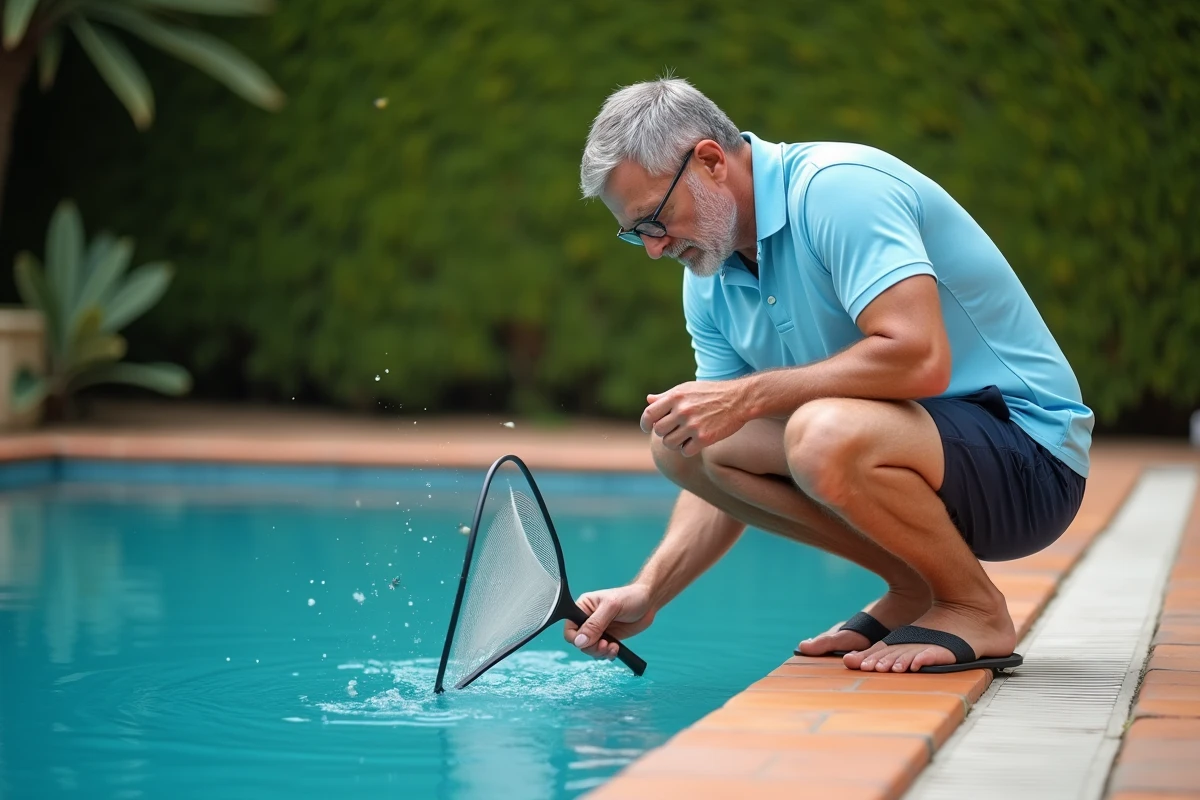
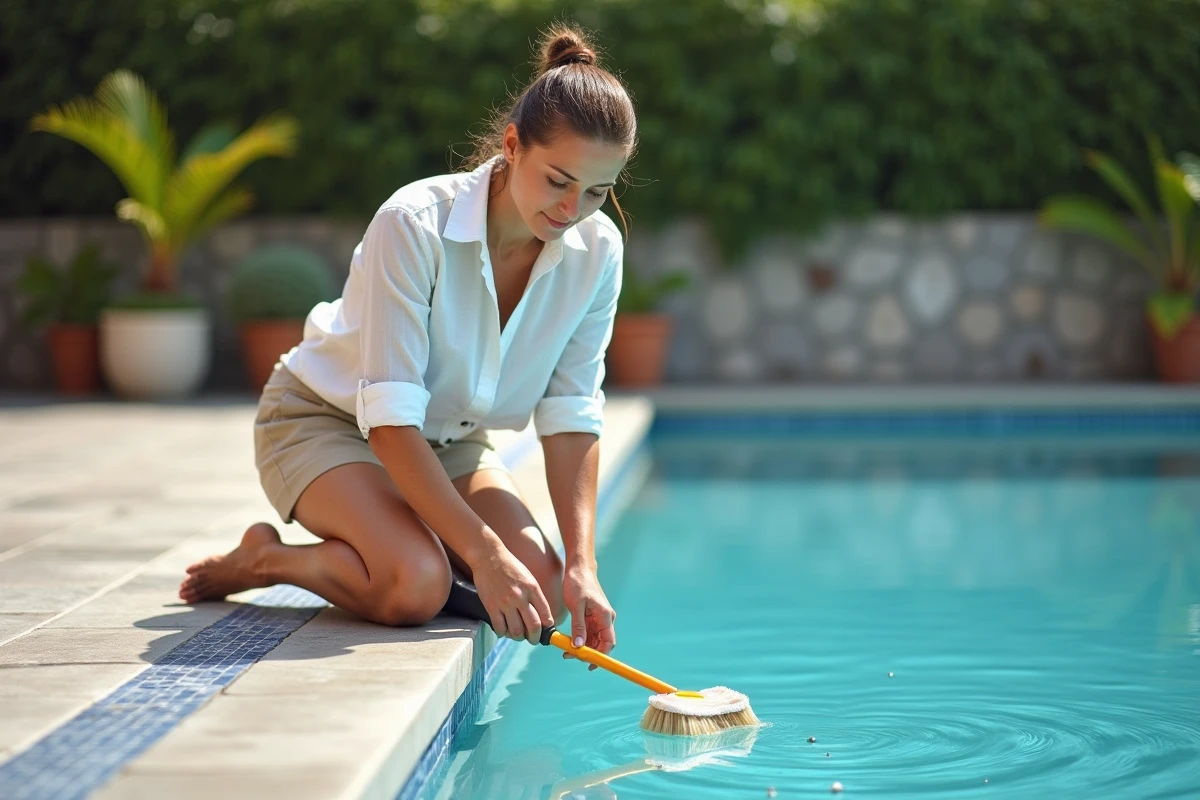
Once the larvae are dead, they fall to the bottom. They must be removed with a fine net or pool robot before they decompose and feed a new cycle of algae proliferation. Cleaning the walls with a brush completes the operation by dislodging any eggs that may be stuck below the waterline.
Filtration and filter maintenance after treatment
- Clean the skimmer basket and the pump pre-filter, often clogged with larvae residues
- Perform a backwash of the filter to remove debris trapped in the filter media
- Check the filter pressure gauge after restarting: an abnormally high pressure indicates residual clogging
- Analyze the water forty-eight hours after treatment to confirm a return to normal chlorine and pH levels
Sustainable prevention: what really prevents the return of worms and glass
On the larvae side, prevention relies on two pillars: maintaining a constant disinfectant level and never allowing filtration to stop for more than twenty-four hours during the hot season. Pool covers also limit breeding, provided they do not create pockets of stagnant water on their surface, which would offer a second breeding site for mosquitoes.
On the filter glass side, prevention involves an annual inspection of the skimmers and diffuser. Filter glass lasts longer than sand but is not eternal: the internal parts of the filter undergo mechanical wear that can only be detected by opening the tank. Field feedback varies on the ideal replacement frequency, but a visual check every year at the pool opening remains the most reliable practice.
Regular maintenance of the pool (brushing the walls, emptying the skimmers, weekly water analysis) remains the best barrier against these two problems. A pool with properly functioning water chemistry and filtration system does not allow larvae or glass particles the opportunity to settle permanently.