Comparing alternative ways to travel involves measuring variables that are rarely placed side by side: carbon footprint, cost per day, depth of local experience. This article confronts modes of transport, types of stays, and the concrete trade-offs that each option imposes.
Night trains, bike touring, and workation: a comparison of alternative travel formats
Three formats are currently capturing the attention of travelers seeking different getaways: long-distance night trains, bike touring, and workation (a prolonged stay combining remote work and exploration). Their logics diverge on almost all criteria.
| Criterion | Night Train | Bike Touring | Workation |
|---|---|---|---|
| Typical Duration | 2 to 5 days per trip | 1 to 3 weeks | 3 weeks to several months |
| Average Daily Cost | Moderate (ticket + cabin accommodation) | Low (bivouac, campgrounds) | Variable (furnished rental, coworking) |
| Carbon Footprint | Very low compared to flying | Almost none | Low if using land transport |
| Local Immersion | Limited to stops | Strong (crossing villages, encounters) | Strong if staying long-term in one place |
| Physical Accessibility | High | Physical condition required | High |
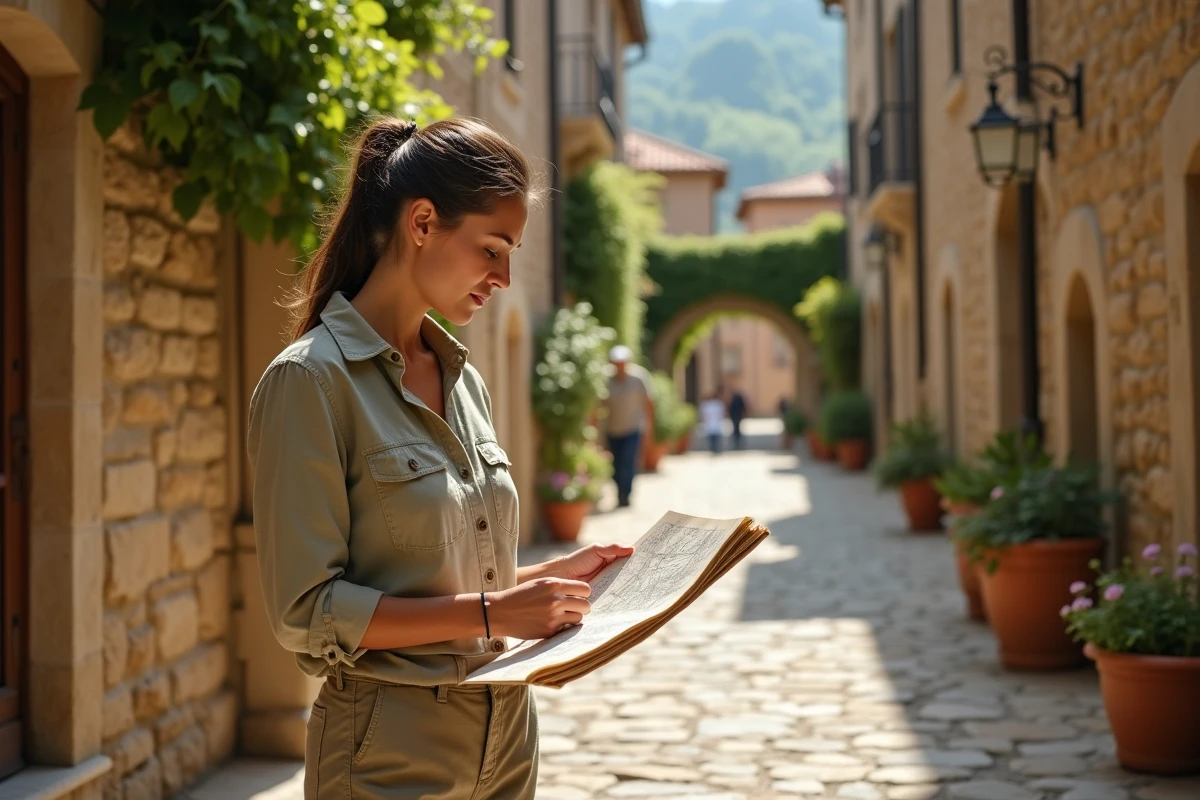
This table highlights a often overlooked point: the type of stay determines the depth of the experience much more than the destination itself. A bike trip through villages in southern France provides an incomparable immersion compared to a weekend by train, even to a renowned destination.
Resources like vagabondes.fr document these female travel approaches by combining travel narratives and practical advice, helping to choose the format that fits one’s constraints.
Night Trains in Europe: A Network Under Reconstruction That Changes the Game
The revival of European night trains is one of the highlights of alternative tourism in recent years. The relaunch of the Nightjet network by the Austrian company ÖBB has reopened long-distance routes, particularly between France and Austria or between Germany and Italy.
This dynamic is driven by two distinct engines. The first is carbon sobriety: the night train replaces a short-haul flight without losing useful time, as the journey takes place during sleep. The second is more unexpected: the adventurous aspect of night train travel attracts an audience seeking an experience, not just a means of transportation.
However, the network remains uneven. Intra-Benelux connections are improving, but some corridors are still poorly served. A traveler wishing to plan a night train itinerary must check the actual frequencies, which vary by season and company.
Concrete Limitations of the Night Train
- Individual cabin spots must be booked several weeks in advance on popular routes, which reduces flexibility.
- Comfort varies greatly between a standard sleeper and a private cabin, with a price gap that can double the transport budget.
- Connections between national networks are not always coordinated, which sometimes imposes an unplanned overnight stop.
Workation and Slow Travel: When Remote Work Extends the Stay
Workation, a contraction of “work” and “vacation,” has seen significant growth since 2022-2023. Several recent surveys confirm the trend: several-week stays combining remote work and exploration, with a preference for nearby destinations accessible by train.
This format changes the very notion of alternative travel. Instead of concentrating vacations into one or two annual weeks, workation spreads the experience over longer periods. The traveler settles in, frequents local shops, and adopts a lifestyle that resembles a temporary residence more than tourism.
Criteria for Choosing a Workation Destination
Suitable accommodations require reliable Wi-Fi and a quiet space to work. This criterion eliminates a good portion of traditional vacation rentals. Destinations that invest in coworking spaces near furnished accommodations attract this growing audience.
Conversely, an isolated village without stable connectivity is not suitable for workation, even if it offers exceptional local immersion. The choice of destination depends as much on digital infrastructure as on the setting.
Hiking and Bike Touring in France: Routes That Renew Getaways
Long-distance hiking and bike touring represent the most radical form of alternative travel. No engine, no rigid reservations, a direct relationship with the territory traversed.
France has a dense network of long-distance hiking trails and green cycling paths. Bike touring allows connecting villages that traditional tourism ignores, following routes along rivers, canals, or ridge lines.
This format requires specific preparation. The weight of luggage, the ability to manage weather uncertainties, and the planning of stages condition the success of the trip. A first itinerary of three to five days on a marked route allows testing the format before committing to longer adventures.
- The developed greenways provide a safe terrain to start, with regularly spaced accommodations along the route.
- Bikepacking (biking with lightweight panniers) reduces dependence on fixed accommodations and opens up wilder routes.
- Combining train and bike allows reaching a distant starting point without using a car, by taking the bike on equipped TER or Intercités trains.
The choice between these alternative travel formats depends on a variable that guides rarely mention: the available time conditions the format much more than the budget. A week necessitates the night train or short hiking. A month opens up workation or bike touring.